
Run Your Restaurant from WhatsApp, Not Another Dashboard
Restaurant owners already run half their day through WhatsApp. AlpineTable brings bookings, menu updates, marketing, and planning into that rhythm instead of forcing another login.
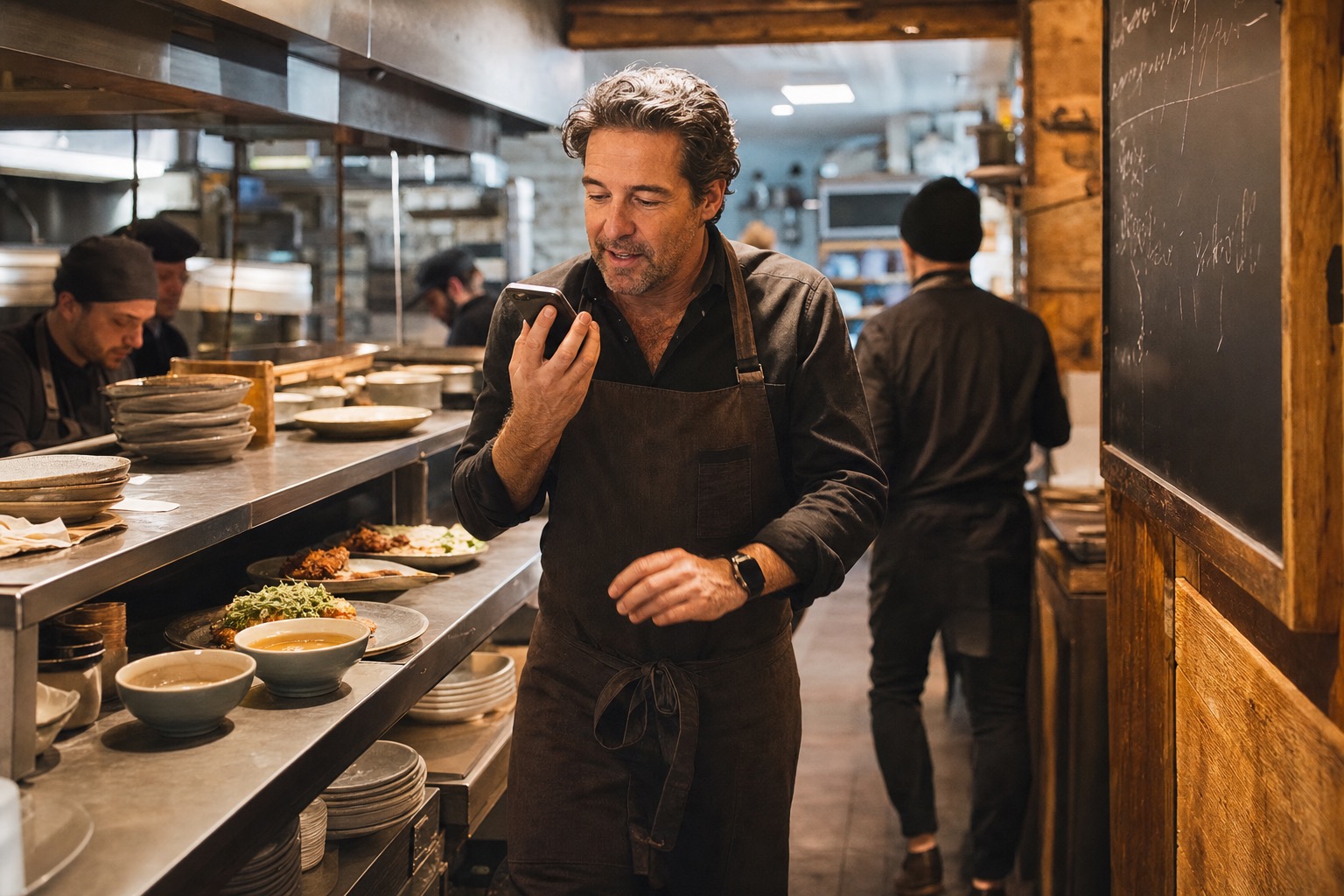
Restaurant owners do not need another place to check. They already have one.
It is WhatsApp. It is where the fish supplier sends the morning availability, where the baker confirms the extra bread, where the staff group chat says someone is stuck behind a snowplow, where a regular asks if the terrace is open, where the owner sends a voice note while walking between the pass and the dining room.
So the question we keep asking at AlpineTable is simple: why should restaurant software force the owner to leave that flow?
The best operational tool is not always the biggest dashboard. Sometimes it is the assistant that sits inside the channel the owner already opens fifty times a day.
WhatsApp is already the back office
If you run a restaurant, especially a seasonal one, WhatsApp is not just chat. It is purchasing, staffing, problem solving, guest follow-up, last-minute favors, supplier negotiation, private-event planning, photos of the new chalkboard menu, and quick decisions made while standing up.
That is why AlpineTable treats WhatsApp as an operations surface, not a notification toy. The owner should be able to ask a real question, make a real change, approve a risky action, and keep moving.
The dashboard still matters. It is where you review the whole service, configure the restaurant, manage the calendar, and see the business clearly. But the daily work should not require the owner to stop, sit down, remember a password, and navigate a web app every time something changes.
Real daily use cases
These are not demo prompts. They are the little operational moments that happen in real restaurants every day.
- A supplier messages at 8:12 that the trout is short today. The owner sends AlpineTable a voice note: replace the trout dish with perch, keep the same garnish, and mark it as today only.
- A group calls while the owner is on the floor. The owner forwards the details into WhatsApp: add Martin, 7 people, tomorrow at 12:30, terrace if weather holds, two kids, one gluten-free.
- The kitchen wants to close lunch bookings thirty minutes earlier because a private dinner needs prep. The owner writes: block online lunch bookings after 13:30 this Friday and tell me what reservations are already close to that time.
- A regular asks if there is space for four after ski school. The owner asks: what do we have between 13:00 and 14:00 for four, and are any of them returning guests?
- The terrace suddenly opens after a cloudy morning clears. The owner says: draft a message to opted-in guests about sunny terrace tables this afternoon, friendly tone, no discount.
- A menu photo is taken at the pass. The owner sends the photo and writes: use this as the lunch menu, but ask me before publishing.
The fun part: AlpineTable knows the restaurant
A normal chat assistant can write a polite message. AlpineTable can do more because it knows the operational state of the restaurant.
It knows the bookings, the waitlist, the guest profiles, the menu, the blocked dates, the service pressure, the opted-in marketing audience, and the mountain context around the restaurant. That means WhatsApp becomes more than a remote control. It becomes a manager that can connect the dots.
- An event is coming to town in two weeks. Ask AlpineTable what that means. It can look at the calendar, current bookings, local demand signals, terrace capacity, staff pressure, and past guest behavior, then suggest whether to open earlier, stock more, create a special menu, or send a campaign.
- A weather window appears for Saturday. AlpineTable can help plan the terrace, warn about no-show risk, draft a guest email, and remind the owner which bookings asked for outdoor seating.
- A bike race or ski-school week is likely to bring families and groups. AlpineTable can suggest earlier prep, kid-friendly menu visibility, larger table controls, and a message to guests who booked similar periods before.
- A supplier shortage hits during a peak week. AlpineTable can turn a voice note into menu changes, then help draft a clear guest-facing update without making the owner rewrite everything after service.
Approvals matter
There is a big difference between asking a question and changing the restaurant.
If the owner asks how many covers are booked tonight, AlpineTable can answer directly. If the owner asks to cancel a reservation, publish menu items, block a date, or send a marketing email, the assistant should show the proposed change and ask for approval before it acts.
That matters because WhatsApp is fast. Fast is useful, but restaurant software still needs judgment, permissions, and an audit trail. AlpineTable is designed around that balance: natural language for speed, explicit approval for risky changes.
What this changes for owners
The promise is not that owners will never open AlpineTable. The promise is better: they do not need to open it for every tiny operational move.
They can stay where the work is already happening. They can send a voice message in a hurry. They can turn a menu photo into structured changes. They can ask for the day’s pressure before walking into service. They can plan around an event before everyone else notices demand moving. They can draft a campaign without staring at a blank email editor at midnight.
That is the kind of software we want to build for restaurants: less ceremony, more understanding.
A restaurant system should feel like staff
Good staff do not wait for perfect instructions. They know the room, remember the regulars, understand the weather, notice the pressure, and ask before doing something risky.
That is the bar for AlpineTable on WhatsApp.
Not another dashboard competing for the owner’s attention. A practical manager in the channel where the restaurant already runs.